Wednesday, April 3, 2013

Reimagining the Star Wars prequels

I don't usually write fan fiction. The very phrase carries with it a plethora of connotations - most of them involving weird sex (think very carefully before you click that link).

But after watching Red Letter Media's Plickett reviews of the Star Wars prequels I did jot down some ideas. (If you haven't seen the reviews set aside a couple of hours and click on that link. It is worth it.)

So I had a little crack at rewriting the prequels based around the following problems:
  • There is no protagonist in The Phantom Menace. 
  • There is no likeable protagonist in any of the films. Obi Wan just does dumb things that he learned from his dumb master. 
  • Having C3-PO and R2-D2 around causes more plot headaches than it is worth. 
  • Jar Jar Binks exists. 
  • There is actually little action and lots of talking about trade federations and blockades and midichroleans. This stuff, coupled with some really dull characters and directing choices, makes the movies boring.
What had me most excited about the prequels were some of the insights we received from Obi Wan in the original film (A New Hope). This was all we had about the time before Luke found the droids. He spoke of nobility when discussing the Jedi and provided two important pieces of information about Anakin Skywalker - he was "the best star pilot in the galaxy" and he was "a good friend." Well the prequels as they exist don't show us any of this. Being able to race pods makes him the best pilot? Strange, especially when Obi Wan isn't even present for the whole sequence. For my remake the story centers on Obi Wan and Anakin's friendship - from meeting to disintegration.

I didn't think too much about it so many of the planets and characters from the available prequels still appear. I've also tried to show that Leia's father (Bail Organa) served with Obi Wan in the Clone Wars since this is the only reason she messages him in the original film anyway. I've kept Darth Maul and Padme (though her character is much more straight forward). What I did axe was some of the characters who appeared far too often (the trade federation, Count Douku) or in roles they were ill suited (Yoda should not wield a lightsaber. Ever.) There's no droids, Jar Jar or Chewbacca. But there are Wookies and some more background on Boba Fett (though not in the episode below). There's no Han Solo but there's pirates. And a clone war that actually appears in the films - not an accompanying animated series.

What follows is a really rough outline for a remade Episode 1. I'll post the other episodes over the next few days too. Comments and crticisms are more than welcome.


EPISODE 1: THE BALANCE OF THE FORCE

Above Naboo, a Mon Calamari cruiser is attacked by a pirates. On board is teenager Anakin Skywalker and his parents. The pirates face off against the security squad of Senator Palpatine of Naboo. Specifically the leading pirate wears a black, hooded cloak that hides his face. The pirates are successful in subduing the bridge and begin to clear the decks, looking for the senator. While ransacking guest quarters, they are stopped by the Skywalkers who are killed in front of Anakin. Anakin escapes to the dock and commandeers one of the pirate star fighters. He attacks the pirate ship is able to out maneuver their fighters. His piloting appears to be on instinct and he is successful in disabling the pirate ship. Escape pods manage to get away. The lead hooded pirate escapes without the senator and watches the space battle from the outskirts of the battle. As a new starship enters the system from hyperspace he orders his pilot to leave.

Jedi Knights arrive from hyperspace to arrest the pirates and find the Senator. After hearing details of Anakin’s exploits, the two Jedi request a meeting him. Believing Anakin to be strong in the Force they offer to take him with them to Coruscant. He is skeptical, claiming he was lucky in attacking the ships, but accepts when Palpatine also offers his support.

On Coruscant Anakin is taken to the Jedi Temple to meet Master Yoda and his pupil, Obi Wan Kenobi. After testing him with a Jedi Mind Trick, Yoda allows Obi Wan to train him. That night, Anakin is invited to a reception hosted by Palpatine, which Obi Wan attends as well. There they meet Padme Amidala, an ambassador from Naboo and Senator Bail Organa of Alderaan. Organa expresses his concern at the rising number of pirate attacks on peaceful systems. Palpatine advocates for a stricter response which the others disagree with. Both Anakin and Obi Wan take a liking to Padme, though Obi Wan reminds Anakin of the Jedi oath he will take tomorrow.

Before Yoda and Mace Windu, Anakin takes his Jedi Oath. He begins his training with Obi Wan on an isolated part of one of Coruscant’s moon. The training comprises of both physical challenges and mental puzzles. Anakin is successful in anticipating threats, such as rocks hurled at him by Obi Wan, but struggles to manipulate other objects such as the entrance to an ancient temple. At night they discuss fear, as Anakin admits his frustration at not being able to save his parents. Obi Wan reveals that he was orphaned as a boy. He resented his parents until a Jedi taught him how to find balance in the force. Anakin hopes he can find this inner peace.

Elsewhere, the planet Kemino comes under attack from a pirate army. It is unusual for pirates to attack an entire planet. Obi Wan is sent to investigate and takes Anakin with him. A pirate army blockades the planet. Obi Wan is unable to sense their thoughts. Knowing of Anakin’s exploits above Naboo he entrusts the piloting to Anakin to is able to breach the blockade and evade the enemy fighters. Landing on Kemino, they make their way to the capital with Anakin flying through the difficult terrain and avoiding ground-to-air cannons.

Upon reaching the parliament they realize why they could not sense their thoughts- the pirate army is made up entirely of clones. They appear to be under the command of the hooded pirate whom Anakin identifies, and Obi Wan realizes (from the insignias on his tunic), is a Sith Lord.

They retreat to contact Yoda and Palpatine. Palpatine sends Padme to negotiate but she is captured upon entry into the system. Obi Wan and Anakin see this from their hidden ship and re enter the capital to save her.

Meanwhile on Coruscant the clone army arrives and blockades the planet. A second Sith Lord, identifying himself as Darth Sideous, attacks the High Chancellor and assassinates him. Mace Windu arrives with the Royal Guard and the army retreats. Under attack from Republic Navy reserves, the Clones retreat from the system.

On Kemino the Jedi are successful in freeing Padme and rescuing the Prime Minister. The reserve navy arrives and engages the clones in battle. The clone army promptly retreat. As they try to escape, the hooded pirate reveals himself. Darth Maul confronts the Jedi and Padme. Obi Wan attempts to hold them off and draws Maul into another room. Maul destroys the door control before defeating Obi Wan with his double edge light sabre. Obi Wan is injured and left unconscious. Frustrated and sensing Obi Wan’s pain Anakin angrily uses the force to open the door. Anakin picks up Obi Wan’s light sabre and attacks Maul fighting him to a stale mate. Maul taunts Anakin telling him that his parents died because they were weak and that true power comes from true hate. He uses the force to block Anakin’s path and fires a lightning bolt towards Anakin. Anakin anticipates the attack and the bolt misses though Maul escapes. He reunites with Padme as Obi Wan regains consciousness and the arriving Jedi rescue them.

Having returned to Coruscant, the two Jedi are awarded honours by Organa and Palpatine for saving Padme. Anakin smiles, pleased with the recognition, while Obi Wan remains stoned faced and neutral, his emotions balanced in the force. 


Monday, April 1, 2013

School Leadership and Kennett's eight year theory

Jeff Kennett's recent declaration that Hawthorn coach Alistair Clarkson should "be sacked or resign" at the end of the year has caused significant discussion in footy mad Melbourne. Is failing to beat Geelong since winning the 2008 AFL Premiership against said team justification for dismissal? Kennett claims the side has underachieved by winning only one Premiership from two grand final appearances since 2004. The merits of this are debatable but I'm interested in Kennett's theory on leadership.

Kennett's stance is that after years of hearing Clarkson's voice the players become numb to a roasting or verbal push. In the world of coaching this is probably true. AFL has a strong culture of unity with rules to prevent players from readily changing clubs. Unlike EPL or NBA coaches (who rarely last as long as he has anyway), Clarkson probably has faced the same players regularly throughout his tenure. Kennett's statement that "six to eight years was as long enough as any coach should stay at a club" is perhaps based on his own failure to win a third term when he was Victorian Premier. He has pulled out a similar number though when discussing AFL CEO Andrew Demetriou's future as league boss. The argument then was that leaders come in fresh and can establish themselves as leaders. Eight year is time enough to lead change and still provide stability. At the eight year mark, again a figure probably chosen based on Kennett's own experience of public office, a leader and their team becomes too familiar and much less effective. Certainly in Demetriou's case, and perhaps Clarkson's, recent form suggests those around them are tired of the same song and dance. Kennett's argument is that a change in leadership after six to eight years can only be good and preempt the decline that a self-satisfied leader might oversee.

So what does this have to do with school leadership? With a new EBA looming perhaps it is time to discuss the role we want leaders to play in schools. Kennett's belief, though there is little research to support it, could have some basis for how we contract and appoint our principals. The current government school principal contract is a standard five years - the same length as the standard strategic plan. Principal's rarely are appointed at the end of the last review period so can spend the bulk to their first contract implementing a plan they had no say in. An eight year contract would allow them time to settle in and participate in a review of the previous five years. Having been through a few reviews there is no better way to get to know the big picture of a school. Then they would be able to set direction and plan for the next five years - all of which they will be around for. In their last couple of contracted years they would begin a new strategic plan to maintain or readjust the school's goals. An eight year contract would provide this stability.

The biggest problem is that principal's do not always leave after their five years (and why would you want them to if they're doing good things in the school?). Two principal contracts would mean sixteen years at the same school instead of ten. As Kennett says though, people become tired of the same voice and the same personality. Change can be good and can be a catalyst for renewal. It can re-energise people who didn't even know they were stagnating. This seems to be the core belief of the American presidential system - it certainly ensures there is a different voice for the State of the Union address at least every eight years.

So perhaps school leaders should be moved on after eight years? It might work. But it would be conditional on a clear appointment process and development program. The current government has stripped principal's of access to these regional resources. No one is perfect - but imagine being stuck with the equivalent of [insert crappy sport coach here] for eight whole years? There's a reason Clarkson will stay at the Hawks and Demetriou will stay as CEO. It is the same reason Collingwood stuck with Mick Malthouse despite taking TEN years to deliver a premiership (what must Kennett make of that success rate?). We prefer the devil we know to the devil we don't - at least when things are going well. There would need to be regular review periods of course and a chance for 360degree feedback. These mechanisms exist in the current system and should be utilized regularly.

A mentor once told me four years was plenty in a school. Perhaps it is sometimes. But sometimes the job is only half done and a second term is necessary. Whether we need a third term is a question worth asking.

I'm on school holidays so I'm hoping I can blog everyday. If the one month old lets me. They won't all be teacher/education/leadership type stuff. 

Tuesday, February 12, 2013

My Profession Strikes Back

Back in June 2012 I wrote a blog explaining why I was striking. In February 2013 we are back out again, having also stopped work in September and November. The government has had our log of claims since December 2010. Two freaking years.

Sadly we are still 'negotiating'. The DEECD (pronounced Dik'd) has taken us to court in a futile attempt to stop our protected and perfectly legal action. Of course it's legal - under the Fair Work Act you can only take action when negotiations break down. The gov still hasn't worked out the give and take of negotiations. Meanwhile we've reduced our claim to "being the best paid teachers in Australia" to being paid as well as our colleagues in South Australia and New South Wales.

I'm tired. Today I arrived at work at 7.55am to be ready for my 8.15am class. The rest of the day proceeded as normal but I had to work through lunch to get a few extras bits done. I'm not a full time classroom teacher because I have a leadership role (large faculty, 30 teachers, 1400+ students). So my time is spent working on mechanisms to make sure my classroom teachers can support our students. In the last week this has meant:

- spending a night drafting an email on how to work a 38 hour week (in line with the work we are actually paid to do) so that staff feel comfortable working to rule. Obviously this occurred outside MY 38 hour week.

- consoled a colleague who had been abused by a truly horrible student. This student must stay at school for another two years despite his utter dissatisfaction with learning as a concept and his aggressive behaviour towards staff. Sadly, since TAFE places have been cut, he will probably be stuck doing something he dislikes during his formative years. But for now my colleague still has to put up with his abuse.

- completed around four hours of professional reading so that I can advise staff on more effective methods of giving students feedback (yes, it is part of my role to teach teachers - the government isn't interested in doing that anymore since they sacked the regional experts who supported schools).

- a full diary of meetings that means I'm only halfway through my 46 year 12 practice sacs sitting on my desk that might get done before Friday afternoon. There's 23 year 9 diagnostic persuasive essays under that pile.

In my inbox right now are emails from colleagues, parents and book sellers (you would not believe how many) all waiting for me to enrich their lives.

Plus, none of us are on PEDs - we enhance our performance by working freaking hard because we love this profession, not because you'll give us one percent extra to meet an abstract productivity target. Invest in us and we will give you everything we have. (And quit with the 'we haven't been performing' - our results are better than most other states, all of whom are paid better).

So I'm tired. And Ted doesn't care. He has no understanding of what it takes to work with children and adults day after day. Some good friends have left this industry since December 2010, some brilliant, passionate teachers.

And then a colleague sent me the image below (apologies for the swearing).

At least someone appreciates what we do.

So out we go again. I'm tired but my resolve will not waiver. Neither should yours. We are very, very good at what we do and the government's propaganda, misguided press releases, phone legal threats, and incompetent, immature negotiating tactics will not daunt us.

Teaching is not a job. It is a profession of men and women who will not stand for attacks on our good name. We will never hurt your children (even when your children hurt us). We will always support each other (even when others won't). We will not be divided by performance pay or restrictions that pits teacher against teacher for bread crumbs. But we are proud and won't tolerate blatant disrespect.

To my colleagues, we are not done yet. Keep your head held high.

To my employer, treat us like we matter. Treat us with an offer that recognises that we are worthy to guide your children through childhood, adolescence and into adulthood.

Treat us like professionals.

Tuesday, December 25, 2012

Albums of the Year 2012

I brought more CDs this year than I had in a while, mainly because there were so many killer releases that I had to check out. If you got a JB Hi Fi voucher then read on for some recommendations of things you might have missed.

This was a year for excellent metal with a number of bands putting out some of their best work in years. Certainly Soulfly, Testament, Gojira and Kreator unleashed their new beasts that rarely left my car. Each contains the thrash that made them famous but has enough diversions to make them mandatory listens. Parkway Drive is actually still on rotation - they've outgrown the metalcore label that many get stuck with by producing collection that is genre breaking but still contains some of the best breakdowns and gang vocals of their career. Lamb of God's Resolution was more of the same from them, which means it kicked all sorts of arse, but has been overshadowed by Randy's imprisonment dramas in Prague. It looks like they'll continue to release excellent albums without topping Ashes of the Wake (and there is nothing wrong with that). The same could be said of Fear Factory, though The Industrialist isn't as good as Demanufacture or Obsolete but does its best to get there. Wonderfully heavy with some great melodies it still ranks in the top half of their cannon.

There were comebacks this year too - Soundgarden became more than a nostalgia act by releasing King Animal. The power on show in first single 'Ive been away too long' is a nice teaser for an album that picks up from where Superunknown and Down On The Upside left off. Hell it sounds like they were never apart! Likewise Jack White's first solo disc sounds exactly like you thought it would which isn't a bad thing. Each track feels loved and any of them would make fine singles. Kiss finally unleashed Monster as well. It is better than Sonic Boom and contains some real rockers that easily fit amongst the hits from the 70s. (Actually some of the 80s albums, like Creatures of the Night, might be a better comparison.) The Killers returned from their hiatus with Battle Born, an album that promised a lot, thanks to lead single Runaway, but doesn't quite deliver. It has grown on me though, thanks to Flesh and Bone, Miss Atomic Bomb and Matter of Time being absolutely cracking songs with huge choruses, but it is essentially their first misfire. Bruce Springsteen's Wrecking Ball came out early but will get a boost when he finally tours next year. There is some great stuff on it as he again captures the challenges of working class life. Not sure about the hip hop beats though.

Muse's The 2nd Law was a mixed bag. Like Resistance, it aims for the bombastic whenever it gets the chance which is admirable but doesn't always work. The better moments find it difficult to stand out when everything is from a different genre. Their musicianship is still brilliant but I couldn't help but feel I'd heard this all before. And it hit me - half the album sounds like Silverchair's Neon Ballroom and Diorama, albums that came out a decade ago. The other half moves closer to Nine Inch Nails. With this in mind their genre bending has been done before and probably done better. Download 'Supremacy', 'Panic Station' and 'Madness' and leave it at that (and seriously what the hell is Survival? Just terrible lyrics).

Slash's second solo album (this time fronted in full by the ace Myles Kennedy) was my favourite album this year. It is much more consistent than the previous album with guest singers while still retaining some of the variety that made that release so great. 'Halo', 'You're a Lie', 'Anastasia', 'Staring Out at the Sun' and 'One Last Thrill' rank with his best efforts in Guns n Roses and Velvet Revolver. Indeed the new stuff were amongst the highlights of his show in August. I consider this a must have. It's pure RnF'R and should be turned up to 11.

Best of 2012
1. Slash ft Myles Kennedy & the Conspirators - Apocalyptic Love
2. Testament - Dark Roots of the Earth
3. Soundgarden - King Animal
4. Gojira - L'Enfant Sauvage
5. Kreator - Phantom Antichrist
6. Soulfly - Enslaved
7. Parkway Drive - Atlas
8. Fear Factory - The Industrialist
9. Lamb of God - Resolution
10. The Killers - Battle Born

Check out
Gary Clarke Jnr - Black and Blu (blues and rnb for the new decade. Do it)
Lana del Rey - Born To Die (really good lyrics and beats)
Bruce Springsteen - Wrecking Ball
Fozzy - Sin & Bones (vast improvement on previous work)
Jack White - Blunderbuss

Forget about
Pink - Truth About Love (sounds like a parody of her better work)
Green Day - all three albums (radio still playing the single off the first one. No one gives a crap)
Marilyn Manson - Born Villain (lost and totally irrelevant. More than a decade since he did anything good)

Feedback welcome as always


Tuesday, July 24, 2012

How the Dark Knight Rose

So by now you've hopefully seen Christopher Nolan's superhero masterpiece The Dark Knight Rises. With TDKR completing the (originally unplanned) trilogy, there won't be a Batman film for sometime. Sure, they might go through with the Justice League film that appears to be moving forward, but Batman as a serious protagonist is done with for now.

What I have enjoyed most about Nolan's series is that he culls some of the best stuff from some brilliant Batman stories. Unlike the Marvel films which are largely adaptations of key story lines, while some of Chris Nolan, David Goyer and Jonothan Nolan's stories draw heavily on source material they most pinch hit ideas and even sub plots. It was an absolute thrill to watch the subtle hints to Batman's comic book history and this greatly added to my enjoyment. Since not everyone is familiar with the comics (which are best purchased as graphic novels/trade paperbacks), I'm here to help you get below the surface of the films and perhaps, give you some reading to fill the void before the bat-signal shines on the cinema screen again.

If you like this blog let me know and I'll do a follow up for The Dark Knight and Batman Begins!

The Dark Knight Returns
This book, by Sin City creator Frank Miller, reinvented Batman. Set in the future where a long retired Batman reemerges to right wrong's in Gotham. Nolan used the theme of Batman's redemption for a past wrong from this comic. Armed with a iron will to defeat crime this old timer retrains and punches the crap out of Superman. That alone is worth the purchase price. The sequel, The Dark Knight Strikes Again, is not nearly as good.


Knightfall
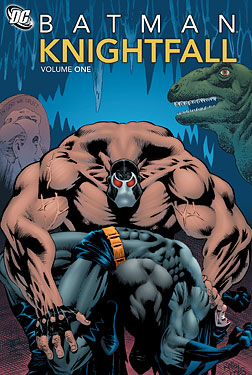
Bane's debut. There is a new release that contains the entire Bane portion of the saga in one huge volume. The first part gives extensive time to Bane's early life and arrival in Gotham. He is a calculating and physically imposing villian that was captured well by Tom Hardy in TDKR. While Bane's personality is very similar in this book, there is a difference in the use of his mask. I can't believe to tell you how much I reverted to a little kid when I saw the image below replicated on screen. There is a pretty good side story too featuring Scarecrow as a central figure, so if you liked Nolan's version of Jonathon Crane it is well worth checking out. The second volume (KnightQuest) covers Bruce's journey to reclaim the cowl from Azareal (who goes bonkers at the end of this volume).

HUSH
Catwoman is easily one of Batman's most enduring and complex characters. While previous depictions have focused on her sexuality, rather than her psychology, Nolan seems to get the balance right. Fully expecting something more throwaway, Anne Hathaway manages to strike a balance between justifiable crime and a desire to do the right thing. I love that she still used guns, a sign that her alliance with Batman is actually as fragile as shown in the comics. In many ways she is his greatest love - and love was never easy. Hush is introduced as a new villain in a year long story. (Actually he would've been a good fit for Nolan's world). I won't spoil it but Catwoman plays a central role and the mystery of Hush's identity keeps the pages turning. Plenty of other rogues jump on for the ride too. You could also check out The Long Halloween or Catwoman:When In Rome for more Catwoman - especially if your only previous exposure was via Michelle Pfiffer or Halle Berry (both of whom played weird supernatural versions that missed Catwoman's humour).


No Man's Land
Gotham is hit by an earthquake and decends into warfare. There are different gangs - led by some of Batman's greatest villains. America gives up on Gotham but Batman has a little something to say about that. Catwoman plays a prominent role too, not unlike TDKR. This was a loooong arc though, and even with the newer releases there are still three volumes to get through.


The last two are spoilers. Stop now if you haven't seen the film since I'm giving away gold.

Talia al Ghul. 
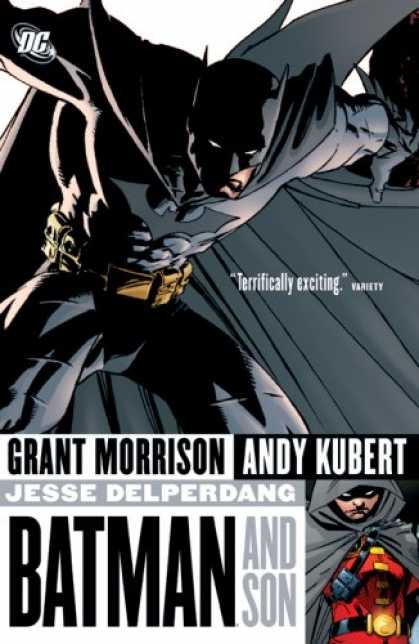
I understand why Nolan chose to put in this twist (which for fans was ridiculously obvious and long rumoured) and I'll give it a tick because it brought a nice conclusion to the story he started in Batman Begins (as did Bane's League of Shadows affiliation - something that he only briefly aligned with in the comics). But Talia has a lot more going for her than revenge. Whilst I said earlier Catwoman is Bruce's true love, it is Talia who gives him a son. Damien Wayne has, in my opinion, revitalized the story line's as he brings a completely different vibe to the role of Robin. But I digress. Like Catwoman, Talia is a powerful woman who needs a powerful man. Who better than the world's greatest detective? Originally introduced alongside her father, who sees Batman as a worth successor, she spends much of her time engaging Batman in mind games and seduction. Grant Morrison's work - starting with Batman and Son through to Batman Incorporated has returned her to prominence as ally and obstacle in Batman's war on crime. Start with Birth of the Demon, a recent release that contains three Ra's & Talia stories. Then check out The Resurrection of Ra's Al Ghul and Batman & Son.


Robin "John" Blake
Now I hated that they put the name Robin out there. See that Batcave revelation in the closing moment doesn't work when the name Robin is attached. Robin is always Batman's second. ALWAYS. When Robin graduates beyond this role, as Dick Grayson and recently Tim Drake/Wayne did, they take on their own superhero codename. Grayson became Nightwing and Drake became Red Robin. While Grayson has donned that Batman uniform on two distinct occasions, including breifly while Bruce recuperated from Bane's beatings, Robin has never really been Gotham's sole protector. So instead, I choose to believe that Blake becomes the next Batman - something that fits in with Nolan's original mantra in Begins. Batman is an idea, a symbol, more than a man. If Blake continues the symbolism than that is fine. But again, I'm off track. What I did like is that the chat Blake has with Bruce is similar to Drake's origin. While Grayson's tale as a ex-circus acrobat was captured in Batman Forever (urgh) and is fairly well know, Drake's story is a less so. Drake deduced Batman's identity as Wayne in a similar manner to Blake in the film. In this light, it is a nice tribute to an awesome, but seemingly forgotten Robin. (Note - ALL of the books mentioned above actually feature Drake as Robin, not Grayson.)

Tim Drake's solo adventures took place as Red Robin. If you are interested in a book with both a different Batman and a new Robin than check out Grant Morrison's opening run on Batman And Robin. With Bruce Wayne believed dead (ring a bell?) Dick Grayson becomes Batman with Damien Wayne as Robin. The dynamic is reversed from usual as Dick lets fly with the quick quips and Damien is a little bit of a psychopath. Kind of like his old man!


If you have other suggestions let me know! And if you're in then I'll give you a trail to follow for the first two films.

Saturday, June 2, 2012

Why I am wearing RED

Just a quick note on the June 7 Strike.

Ted doesn't think we work hard enough because in a DEECD survey of face-to-face teaching hours they found teachers only teach an average 16.3 hours. This surveyed teachers across the state but did not acknowledge time release for additional duties.

At my school, the standard teaching load is 23 x 47minute periods. This is 18.1 hours and does not include home group, assembly or yard duty. My load as a coordinator is 15 x 47 minute periods (11.75 hours) since I also spend 4 x 47 minute periods a week coaching other staff, and have the rest to coordinate 30 staff and 1500 kids.

This week staff at my school did their 18 hours but also completed the following duties:
  • Several took out excursions that took them beyond their usual allotment. 
  • 8 English teachers spent an additional 100 minutes supervising a SAC after school until 5pm on Thursday. 
  • 2 Physics teachers were with students until 9pm the same night.
  • 2 Psychology teachers were with students until 6pm on Monday night. 
  • 10 staff spent all of Wednesday's lunchtime in a trivia contest with students. 
  • PE staff took teams to state championships that took them past their usual allotment. 
  • Music staff ran band rehearsals from 8am to 5pm Tuesday and Wednesday in addition to teaching their usual classes.  
  • 20 teachers supervised the Year 9 Social until 10pm Thursday.
  • With VCE at a peak period a significant number of teachers spent an immeasurable amount of time with groups of students to help them prepare for SACs and exams. This usually occurred during meal breaks and between meetings.
All of this was in addition to mandatory and voluntary meetings. None of this is covered by extra pay, time in lieu, or any proposed performance pay method. It is all unpaid overtime to give students the best chance they have to experience success.


The current system prays on the good will of teachers. To not acknowledge this hard work is insulting. If they want us to teach another hour then it will be harder for us to make the extra efforts described above. The extra hour will come at the expense of more than 1000 teaching jobs. Teachers will be pushed harder for their time. Class sizes will probably be bigger. Certainly I would expect to lose my coaching time to help improve teaching and learning in classrooms. Who is the biggest loser in this scenario?

That is why I'll be wearing red on Thursday.

Feel free to join me.

More on Ted: http://www.theage.com.au/victoria/baillieu-wants-longer-hours-and-merit-pay-for-teachers-20120602-1zp1v.html


Wednesday, May 9, 2012

My profession

Two stories from the last two days.

Yesterday I worked with a colleague to help improve their performance. I had observed their practice for 45 minutes and taken comprehensive notes, mostly related to their management and communication skills. These topics had been decided upon in a thirty minute pre-observation meeting the week before. The colleague was gracious and enthusiastic about the opportunity to have someone watch their work. To prepare for the subsequent meeting I spent around 90 minutes reading through various journals, meta-analysis books and handbooks to find the right bit of research that I could use to frame our discussion. I reflected on my notes and chose a central theme that I felt would benefit her. The conversation was brilliant and quite inspiring on both sides. We shared theory and practical ideas that we'd tried and seen work in other settings. All up we've put in a couple of hours work on top of our usual business and it was wonderful. I'll observe her practice again next week to provide further feedback since now I'm invested in her development. I'll also need to make arrangements with two other colleagues to go through a similar process to help increase the capacity of my team to deliver on a number of KPIs and strategic targets. It's a major part of my leadership role in the organization.

The second moment involves a client who has proven, to be honest, quite difficult lately. She has been rude on occasion and while I've worked hard to deliver my service and expertise as required, she has not met her deadlines or obligations. And so it was again today when she kept making strange noises during our allotted time. Rather than draw attention to this I took a positive approach (an idea from the Masters I'm doing on the weekends so I can further myself in my profession). I focused on what she'd done right and recognized that she'd actually asked a good question, in between interruptions, and had acknowledged she wasn't sure how to proceed. While aspects of this clients behavior could be labelled counter-productive, immature and irresponsible, the fact they'd actually called on my expertise was encouraging. I was not about to let out previous problems resurface. I decided on a strategy whereby I help her begin her work and eventually paired her with someone who could fill in the gaps since I had 25 other clients to attends to at the same time. I did however free significant attention regularly and ensured she knew I wanted her to e successful. She left the meeting with a smile, as did many of my clients that day. All in all I saw 75 clients from 9am to 3pm. I gave each one the best attention I could and, using some of the strategies I'd developed during several recent full days of training, ensured each client got the best out of me. On average I only have 1.5 minutes per client a day. The rest is taken up with preparing for clients and providing them with improvement strategies to better their performance.

It felt good.

Until I went to a union meeting and was told that the government, my official employer, doesn't value what I do and wants me to see more clients, more often, at the expense of developing the capacity efficacy of my colleagues. They also don't really want to pay me more since they consider my current profession to be unproductive and inadequate. Apparently I'm not doing enough. Even more disturbingly, my colleague, who participated in the mentoring process on a good-will & voluntary basis, is being told the same thing. She has 125 clients she sees most days. She literally gave up free time in her otherwise hectic day to get better at what she has dedicated her life to.

But dedication isn't measurable.

Ted, if we are doing such an immeasurable and unprofessional job of looking after our children- imagine what our world will look like if we have to stop?